
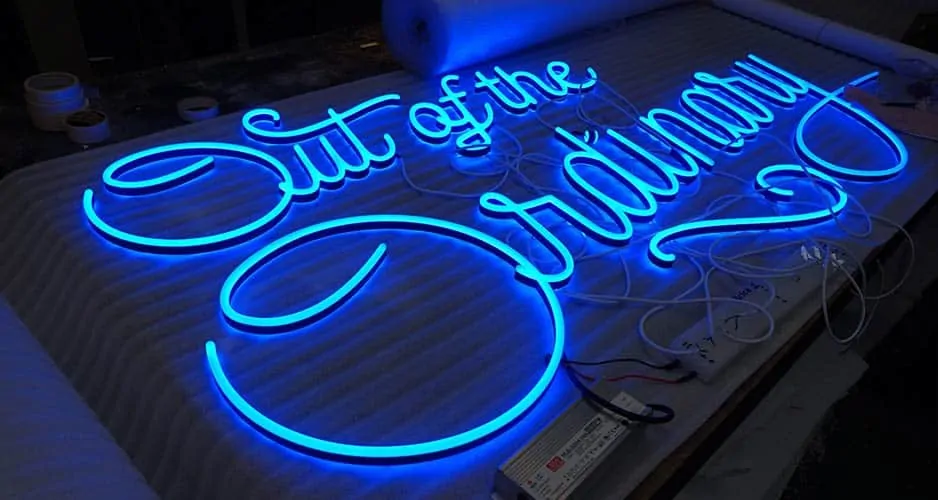
In recent years, LED neon has moved far beyond its original role as signage. What was once used primarily for visibility has become part of how spaces communicate identity.
From restaurants and retail stores to temporary installations at events, LED neon is now used as a visual element that people recognize, interact with, and often photograph.
This shift did not happen overnight. It reflects broader changes in how interiors are designed and how businesses think about visibility in a digital environment.
From Signage to Experience
Traditional signage was created to be read. Modern installations are created to be experienced.
In many commercial interiors today, LED neon is placed not just where it can be seen, but where it can be engaged with. These installations often become natural focal points — especially in environments where people are already inclined to take photos.
This is particularly noticeable in hospitality spaces. A well-placed installation behind a bar or seating area often becomes part of how visitors remember the place.
Why Businesses Are Choosing LED Installations
There are several practical reasons why LED neon is being used more frequently in commercial environments:
- flexibility in shape and design
- consistent and controlled lighting
- compatibility with modern materials and interiors
- relatively simple installation compared to traditional neon
At the same time, there is a cultural factor. Visual elements that work well both in person and on camera have become more valuable than static decor.
The Role of Placement and Scale
One of the most common mistakes in LED installations is not related to the material, but to placement.
An installation that is too large can dominate a space. Too small — and it loses impact. Placement relative to eye level, furniture, and lighting conditions determines how the piece is perceived.
Design decisions like these are often invisible when done correctly, but immediately noticeable when done poorly.
A Designer’s Perspective
For designers working with LED neon, the process typically goes beyond choosing a font or shape.
Dmytro Andrukhov, a Chicago-based artist and Creative Director at CityNeon, approaches installations as part of the overall composition of a space.
Instead of focusing only on the object itself, the process includes:
- how the installation will be viewed
- what materials surround it
- whether it acts as a focal point or a secondary element
This approach helps avoid the common “add-on” effect, where signage feels disconnected from the environment.
Temporary vs Permanent Installations
LED neon is used both in permanent interiors and temporary setups.
In events and exhibitions, installations are designed to be lightweight and easy to install. In commercial spaces, durability and consistency over time become more important.
Despite these differences, the goal is often the same: creating a visual element that people notice and remember.
What Defines a Well-Executed Installation
From a practical standpoint, several factors define quality:
- even light distribution
- clean routing of lines and shapes
- minimal visible wiring
- appropriate brightness for the environment
These details are often overlooked in mass-produced solutions, which is why custom work tends to stand out.
A Continuing Shift
LED neon installations are no longer limited to specific industries. They are now part of a broader visual language used across different types of spaces.
As interiors continue to evolve, the role of lighting as both a functional and expressive element is likely to expand further.
The difference will continue to come down to execution — how well each installation fits into the space it is created for.